

Consistency Beats Perfection. Every Time.
That’s the mindset. Read the bold for what you should do, read more if you feel like learning more.
In general, my recommendations to my patients typically follow this simple timeframe scale. Give it a try:
3 days to start, 3 weeks to dial in, 3 months to maintain, 3 years to master, and finally 3 lives to change—your past, present, and future.
This is my own system to help me ensure the small changes, done repeatedly, beat out that perfect plan I had in my head that will never happen.
15 Things To Do
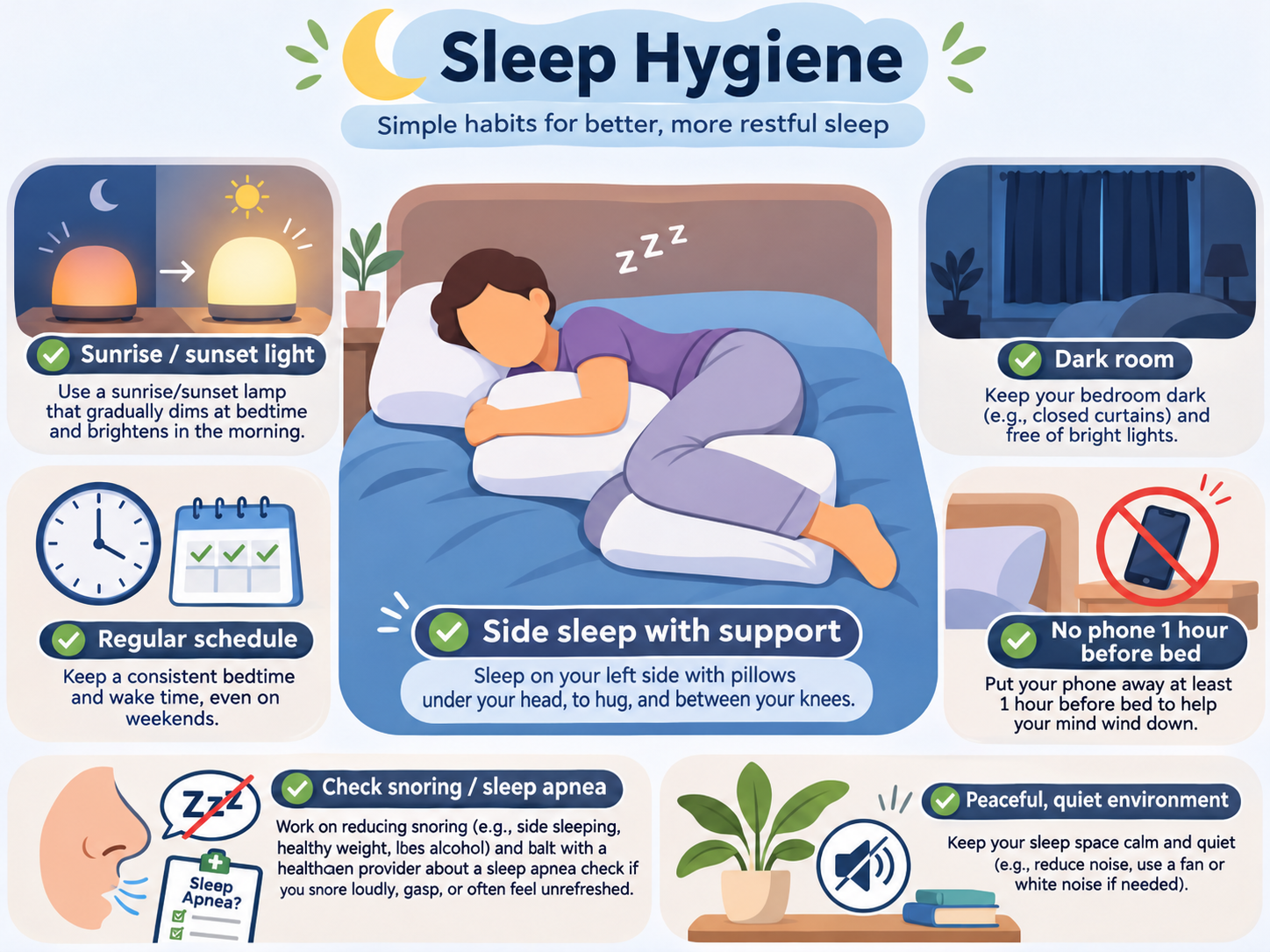
Sleep Hygiene at a glance
1. A dark, cool, and quiet bedroom, consistent bedtimes and wake times, no phones and screens for an hour before bed, and try out a sunrise-sunset lamp.
Verify you do not have sleep apnea and if you do, treat it.
— The goal here is sleep hygiene and maintenance. Aim for 7–9 hours of sleep as an adult and damn it, put the phone away and turn the TV off for at least an hour before bed. Play some white noise if you want. The light at dawn and dusk trigger some amazing science for sleep onset and wakefulness so try out a sunrise/sunset lamp if in your budget. You can also try to use something cool for your forehead to drop your temperature; this can be fairly effective for initiating sleep onset. If you snore loudly, urinate a couple times a night, gasp, or feel exhausted despite adequate sleep, ask about obstructive sleep apnea with your doc. Try some sleep apnea neck and mouth exercises, too. Try different setups for sleep including on your left side supported with pillows for your chest and between your legs. Stroke, heart attacks, diabetes, obesity - it’s common enough, don’t increase your chances with bad sleep; poor sleep and untreated apnea have serious metabolic and cardiovascular consequences.¹
2. Walk every day. Also, get up for a few minutes every 30–60 minutes if you’re sitting all day.
— Morning walks, evening walks, taking the stairs, stretching between meetings—pick the easiest one and repeat it. Work toward a minimum of 150–300 minutes of moderate activity weekly and strength training twice a week. Don’t save all your movement for one heroic weekend; that’s the fastest way to screw something up! The small activities do make a difference, including improvement in blood glucose as seen on randomized crossover studies.²,³ Just keep moving when you can!
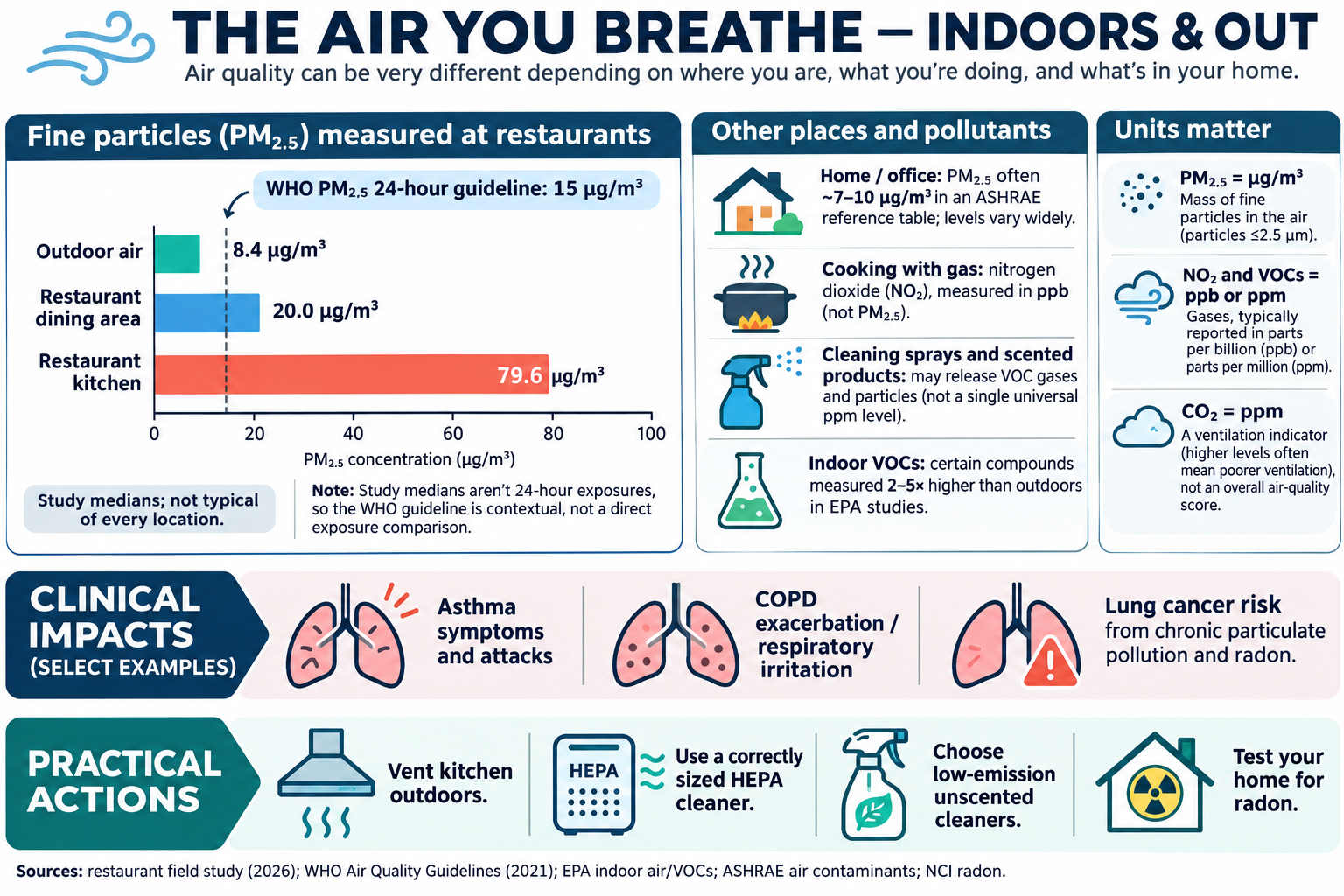
I used AI to generate this basic graphic that’s useful for people to reference. Different components in the air are measured by different units. Particles are measured by micrograms per cubed meter of air volume, gas by parts per million, and so forth. You can see that sometimes the air outside is actually way cleaner than the indoors.
Now, apply that to your local town or city’s air quality reports! You’ll be astounded and realize why poor air quality in the city is a huge risk factor for health… but think small first. Your home (the indoors) is often the bigger culprit!
3. Add a HEPA air filter by your bedroom and your most used room.
Vent the air to the outside when you cook, especially if you use gas.
Try to minimize prolonged exposure to household cleaners.
— Air quality is so very important, it’s sad it gets neglected. The diagnoses of asthma, COPD, various diseases of the lung, and just general life-span lost from poor air quality is absurd. Filter and ventilate the air in your home - this will most certainly improve allergies and lung-related illnesses. Cooking produces particles with and without a gas stove; the gas itself also releases a number of pollutants. As a fellow past restaurant employee, I love cooking with gas but you gotta know your health risks and their solutions. The same is said with unnecessary fragrances, aerosol sprays, and cleaning solutions (e.g. tub sprays and various household cleaners). These will all damage your lungs with time and prolonged repeated exposure. Be mindful since it’s a much bigger risk than people realize.⁴
4. Physical exertion: increase demands slow and steady. “Zero to hero” is just not worth it.
— You know the story: someone sits all winter, then spends hours shoveling heavy snow then suddenly they’re in the ER for a massive heart attack. Sudden intense exertion can trigger cardiac events in susceptible people.⁵ Maybe you don’t fit that profile - other examples include the triggering of rhabdomyolysis (rapid muscle breakdown and kidney damage) in athletes (think about the recent shocking deaths of marathon runners in 2026), throwing out your back or a muscle sprain or tear for the general population, etc. Start with manageable repetitions, pace yourself, warm up, and build capacity over time. I always say “Big changes in short times = no good.”
5. Practice what you want to maintain in life. Each day, practice one physical skill and one mental skill at minimum.
— Don’t use the shopping cart, try doing a farmers carry with all your groceries in one or two baskets. Squat, climb stairs instead of elevators, lift weights, write with pen and paper, learn a language, or solve something without asking AI to think for you. Your body and brain respond to use. Don’t give it a reason to shrink your bones, muscles, and brain away. Here’s a good example, children need to spend more time outdoors: a randomized trial found that adding 40 minutes of outdoor time at school reduced new-onset myopia (nearsightedness) over three years.²,⁶ Nowadays, they have new glasses that can help with children’s nearsightedness by redirecting the light into the eye to prevent their eyes from changing shape. Early interventions like playing outside will always trump these type of reactive attempts of preserving function. Don’t wait until there is a problem.
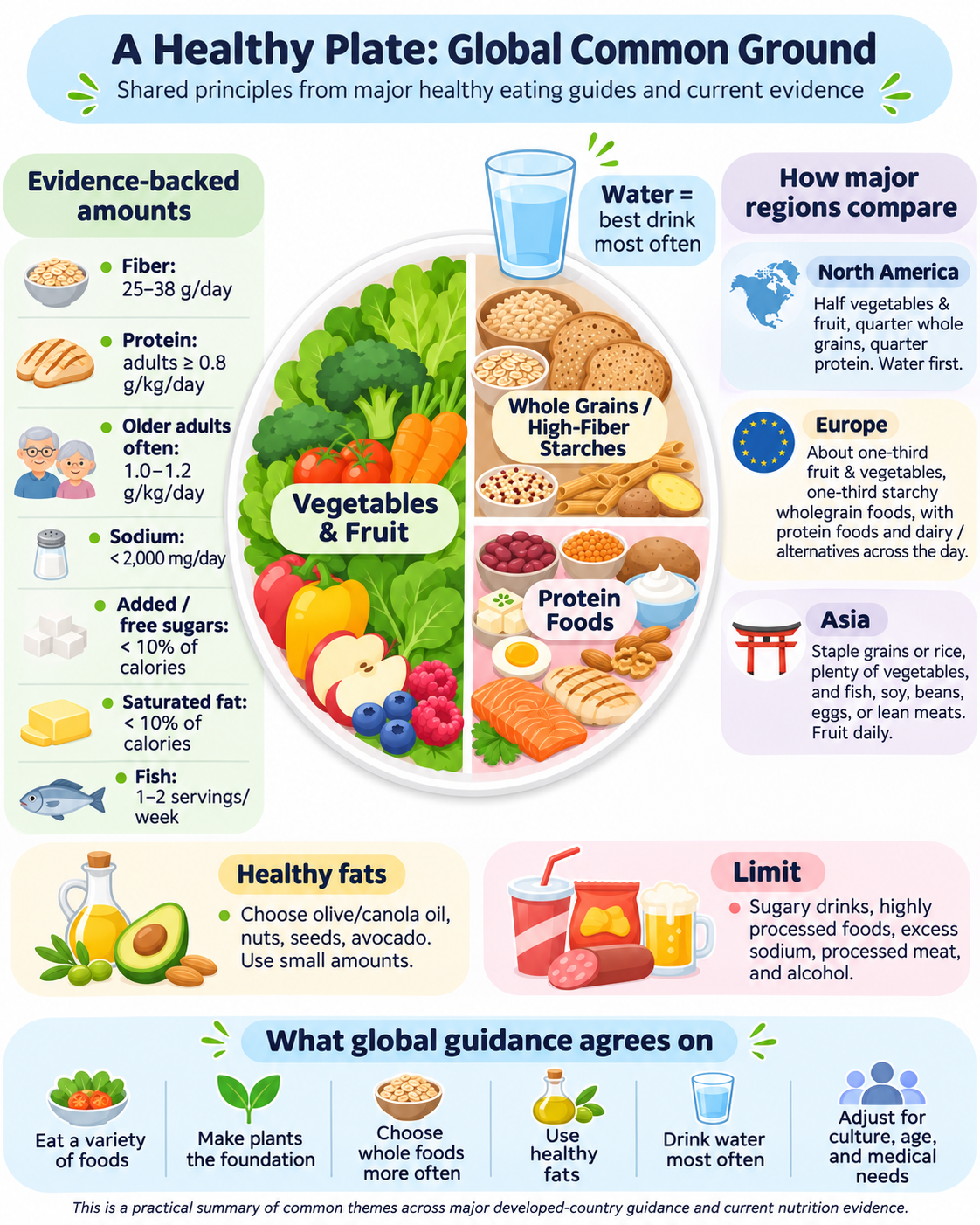
6. Put one whole-food source of fiber on your plate at every meal.
Eat the “bigger molecules.”
— Beans, vegetables, whole grains, seeds, fruit, whole proteins—real food that takes some chewing and work. For example, you don’t have to abandon bread; find a brand or variety with intact grains and more fiber or inulin. In a tightly controlled NIH trial, people ate about 500 more calories per day on an ultra-processed diet than on a minimally processed diet, despite menus designed to match several nutrients. The idea here is that processed food tends to have smaller food particles, which means easier absorption. You don’t need that. You need less of that. So consider the effects of how food is made: eating vegetables cooked in whole form vs those same vegetables blended down… which one absorbs quicker?⁷ Same with powders. There’s no sense in shoving all that protein into your body all at one time. It’s very clear with plenty of evidence that distributing the same amount of protein throughout the day will lead to greater muscle gain. So focus on whole foods, distributed well and digested on a timeframe that your body can actually digest it and use it. It’s like a factory - it’s much better to have expected cargo arriving consistently then one massive order that is unpredictable suddenly taxing the total work capacity.
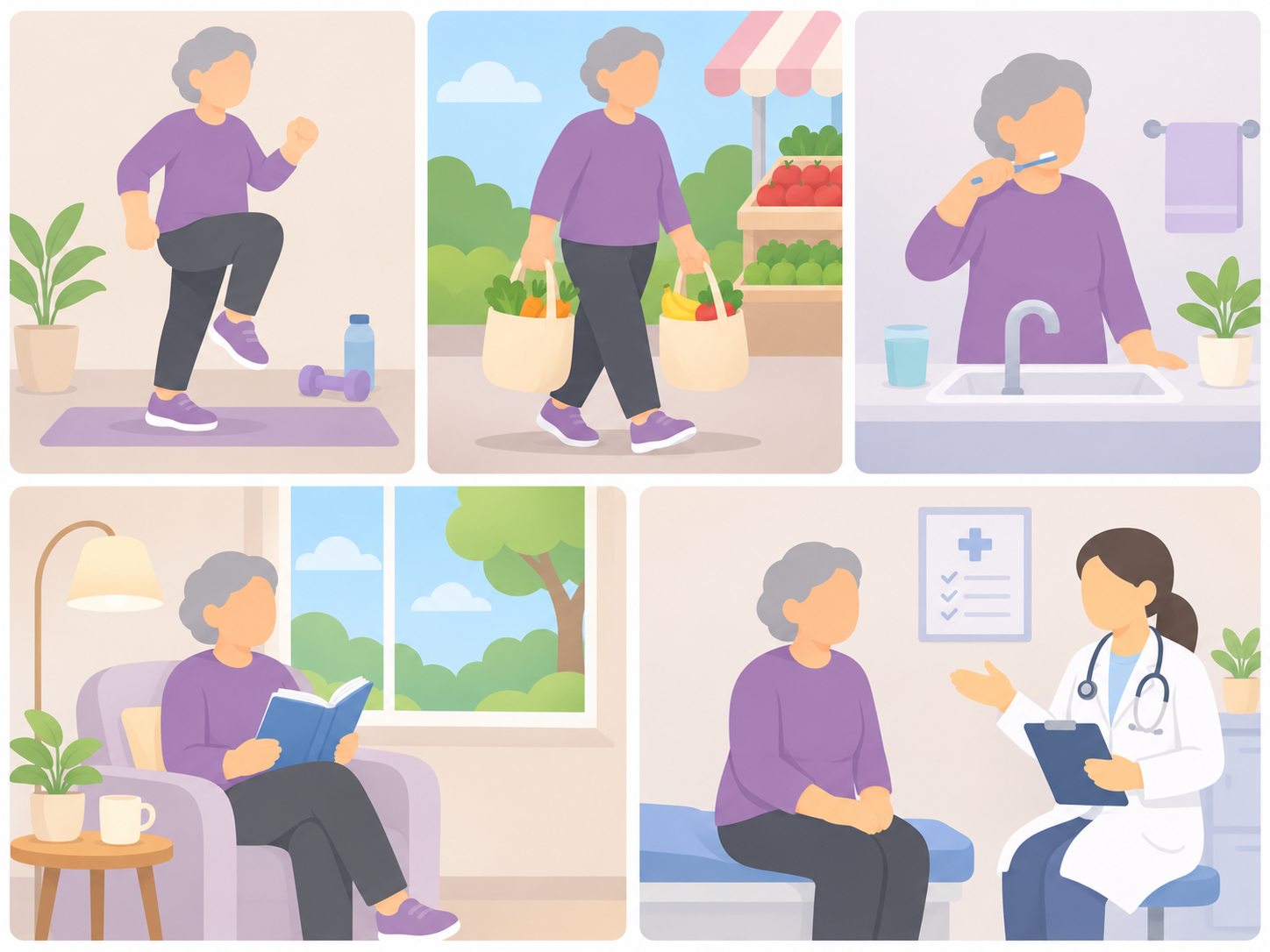
Exercise. Lift your groceries like weights. Brush your teeth. Take some time to yourself. See your doctor. All the things we are suppose to do but can’t due to time, expense, and life… That’s the secret to health.
7. Brush your teeth twice daily and clean between your teeth once a day, minimum.
— Bad teeth = bad (cardiovascular) health. Be consistent with using toothpaste and prevent cavities. Regularly see your dentist once or twice a year. Get rid of those tonsil stones if they pop up and change your diet to prevent them. Gum disease is associated with cardiovascular illness so don’t let it subtly ruin your otherwise good health⁸ Try to avoid the alcohol-based mouth washes.
8. Join one recurring group centered on a hobby you genuinely enjoy.
— A walking group, run club, cooking club, language class, or some volunteer team. The value of time spent on yourself and time spent with a community is a requirement for health. It can be anything; I re-learned Cantonese Chinese partly by watching old Hong Kong films with friends and family; I also met a lot of interesting cooks and international friends while learning Japanese and trying to figure out how to pickle and preserve food. Social isolation is associated with higher premature-mortality risk; so be sure not to neglect this. It’s a time investment in yourself and those around you.⁹
9. Book your preventive-care visits and stay up to date on screenings and vaccines.
— Unfortunately the current health care system and insurance does not reward prevention beyond a couple check boxes and funneling you out the door, but in some cases, you get a great doctor that gets to know you and prioritizes you. Take advantage of that. Put the dates on your calendar before you forget. For example, colorectal cancer screening is recommended for many adults beginning at age 45.¹⁰ Don’t neglect these since many problems have no symptoms. Think about it this way: 12 minutes for a colonoscopy and removing a polyp in a few seconds or potentially risk multiple large, complex surgeries and other life threatening concerns with a massive bill?
10. Protect one 20–30-minute block of quiet time each day, minimum.
— This is your time. Everyone, your boss, family, friends all ask for time. Very few give it back so make sure you protect it. Walk, stare out a window, breathe, think through a decision, or simply do nothing. If doing nothing drives you nuts, use it to plan your next job move, write down a problem, or decide what deserves your attention. Respect the block of time - for perspective, if people can’t respect 30 minutes of time in the entire span of your life, then that should set off an internal red flag.
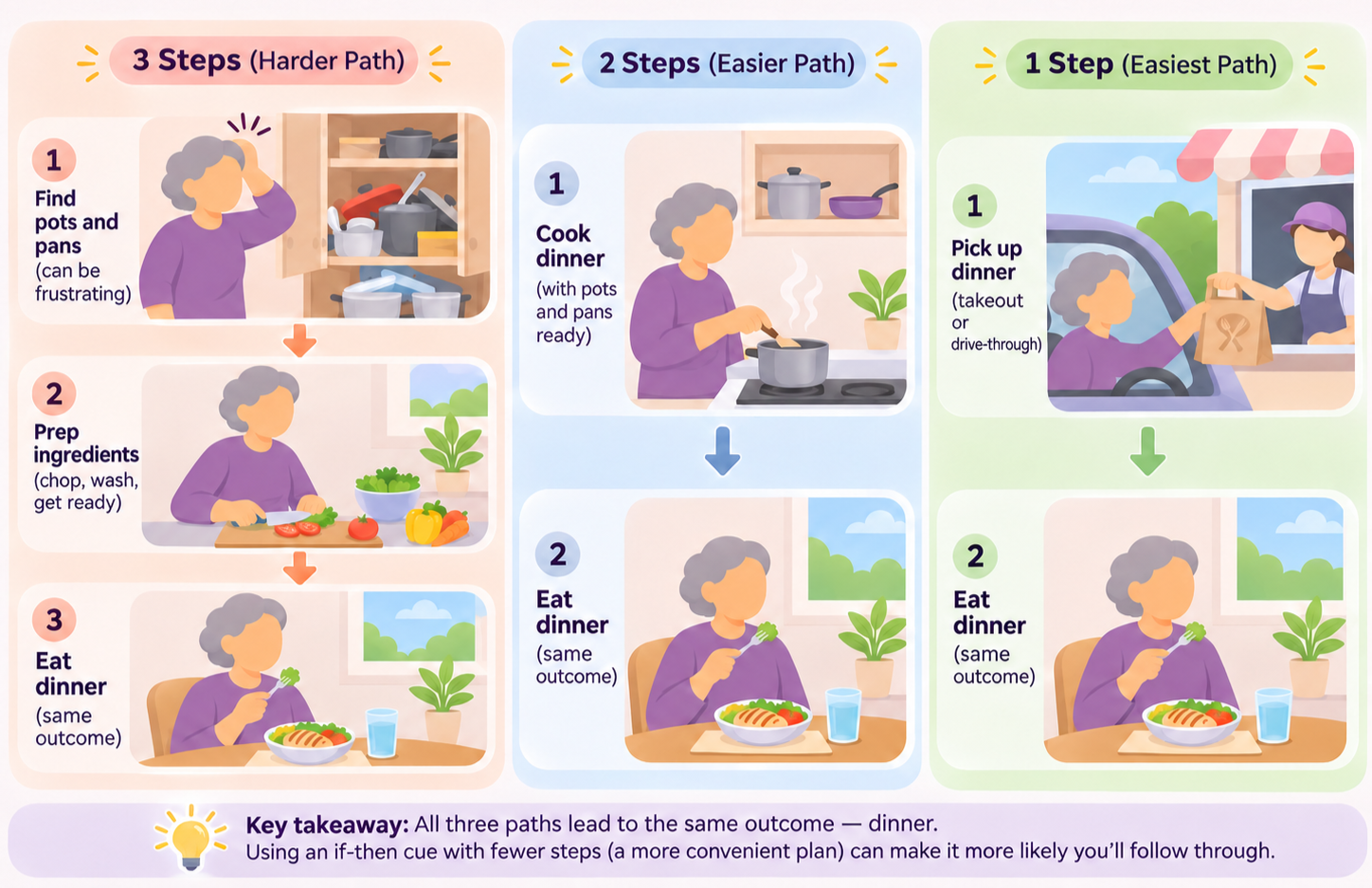
Try to make your life as convenient as a drive-through where and when it matters!
The food and medicine industry is doing it to you at your own expense and health, so might as well beat them at their own game. The easiest option is often where you see the most marketing…
11. Systems of Change. Learn and read about it and how to apply it.
For example: Place one healthy cue where you cannot miss it—and remove one cue for a habit you want to quit.
— When I started exercising, I put a kettlebell between the kitchen and living room. Every time I walked by, I did 5-10 reps. You can leave walking shoes by the door or fruit where you usually reach for candy (then throw the candy entirely out so it’s not a choice). Want fewer cigarettes or impulse snacks? Change the route to buy them entirely. Think about everything you do as “if-then” such as: a patient of mine use to cross a bridge every time going to work and would stop at a gas station to buy cigarettes. The bridge went under construction for 2 years and he took a different way to work. Not surprisingly, he suddenly stopped smoking entirely… until a few years later the bridge finished construction and he reverted back to that route, that gas station, that pattern. Try physically making things easier or more difficult using the above method.¹¹
12. Automate one low-value chore and use the recovered time for something you value.
— A recurring grocery list, automatic bill payment, vacuum schedule, calendar reminder... whatever reliably saves you the mental burden of needing to make an active decision. I hate cleaning, so if a robot vacuum gives me time, I’ll substitute it for walking the dog or cooking. But don’t outsource all movement: mowing, sweeping, and housework can be worthwhile exercise activities, too! Automation should buy you freedom, not a sedentary life.
13. Write down three nonnegotiable boundaries and give each one a time, trigger, and consequence.
— For example: “Kitchen closed after dinner,” “no phone use while it is charging in the bedroom,” and “walk the dog after breakfast.” The strength of structure is that there is no negotiation. It’s clean, you follow it, and it makes you appreciate when there is no structure. Build the system around your real life, then adjust it as it goes.¹¹
14. Make alcohol-free your default and set a caffeine or substance cutoff that protects your health.
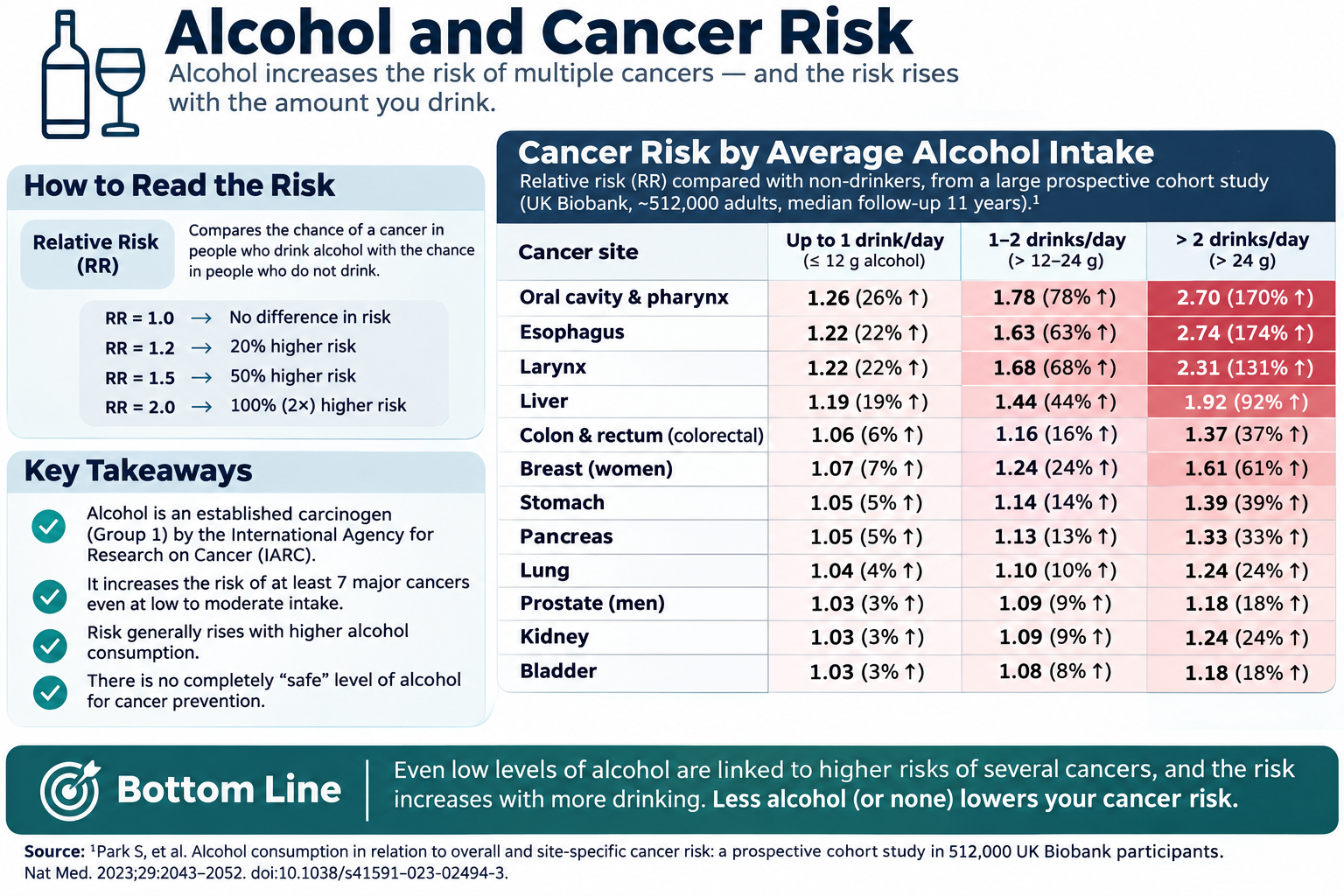
Alcohol is just a bad idea in general. If you’re okay with the risks, then by all means choose it and don’t look back. Just remember, always know what you want and what you’re willing to lose.
— Alcohol raises cancer risk; less is better, and not drinking avoids that exposure.¹²,¹³
Cigarettes, coffee, substances, all of it has pros and cons. Try to minimize it.
Listen, I love my coffee, damn it, but let’s be real - if caffeine worsens your sleep, palpitations, anxiety, or headaches when you use or skip it, don’t ignore it and certainly don’t gaslight yourself into normalizing it. Some people normalize the idea that they need their coffee to do their job. That’s a problem. All of these substances have side effects whether or not they’re acceptable for use in society.
Remember, we weren’t too far off from years ago in medicine where doctors were giving people opium / heroin derivatives for cough suppression and cocaine for lack of energy and maladies of the mood. That’s the history of our favorite soft drink cola!
There’s a reason why people begging for food and money will opt for a cigarette instead of food, given the choice of the two. Cigarettes suppress the appetite. It’s the same reason why when people stop smoking, then gain a ton of weight without that suppression anymore. Be aware of ALL substances and their effects. Anything going into your body is a substance.
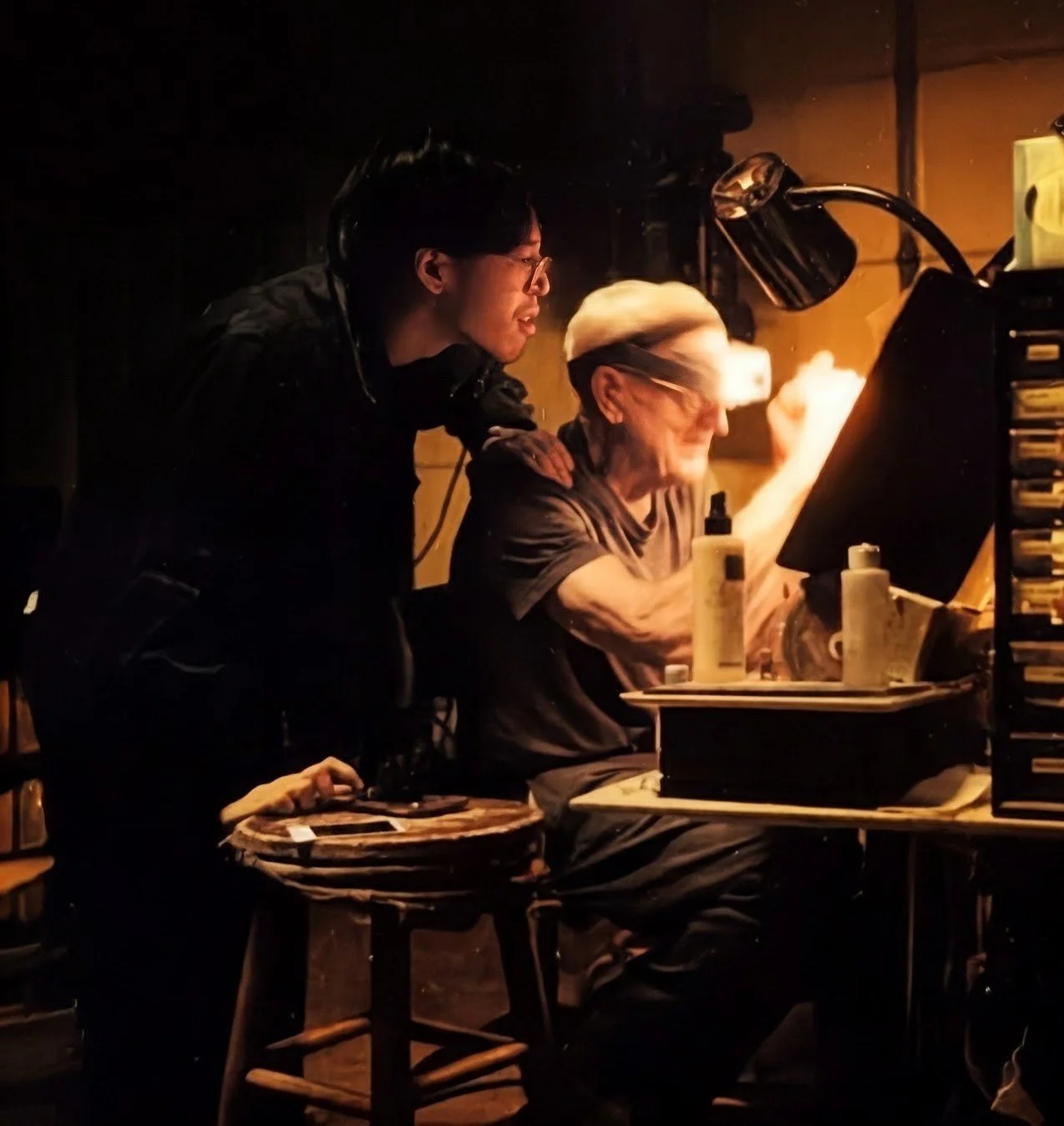
One of my best friends, Bill. Here we are perfecting the next gemstone design through trial and error.
15. Schedule something enjoyable every week that has no productivity goal.
— Eat with a friend, watch a film, cook something just because it smells good, play music, or wander around a park. Not everything needs to extend your lifespan or make you richer. Not everything you enjoy needs to be good for you. It’s a lot better for mental and physical health when you have some space to just exist.
That’s it. Give it a try. Remember, consistency is all you need.
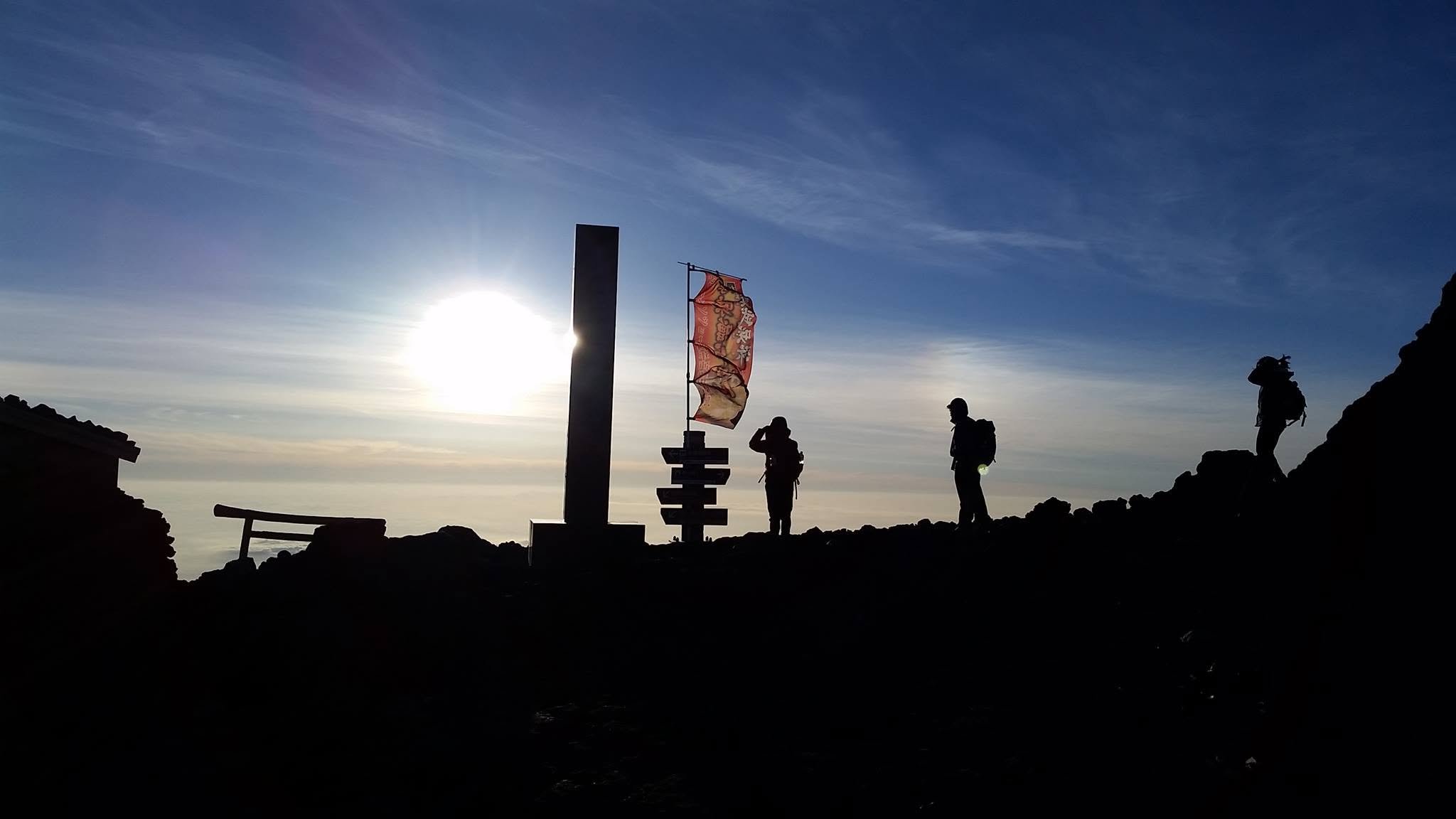
The top of Mount Fuji with my brothers. The trek was pretty tough and the only thing I could think about was one step at a time…
References
1. Centers for Disease Control and Prevention. About Sleep; Sleep and Your Heart Health. https://www.cdc.gov/sleep/about/
2. World Health Organization. WHO Guidelines on Physical Activity and Sedentary Behaviour (2020). https://www.who.int/europe/publications/i/item/9789240014886
3. Dunstan DW, et al. Breaking Up Prolonged Sitting to Improve Cardiometabolic Risk: A randomized crossover trial (2023). https://pubmed.ncbi.nlm.nih.gov/36728338/
4. US Environmental Protection Agency. Guide to Air Cleaners in the Home; Sources of Indoor Particulate Matter. https://www.epa.gov/indoor-air-quality-iaq/guide-air-cleaners-home
5. Franklin BA, et al. Coronary-plaque rupture in acute coronary syndromes triggered by snow shoveling. N Engl J Med. 1996. https://doi.org/10.1056/NEJM199612263352617
6. He M, et al. Effect of time spent outdoors at school on the development of myopia among children in China: A randomized clinical trial. JAMA. 2015. https://doi.org/10.1001/jama.2015.10803
7. Hall KD, et al. Ultra-processed diets cause excess calorie intake and weight gain: An inpatient randomized controlled trial. Cell Metab. 2019. https://pubmed.ncbi.nlm.nih.gov/31105044/
8. American Dental Association. Dental Floss/Interdental Cleaners; American Heart Association Oral Health resources. https://www.ada.org/resources/ada-library/oral-health-topics/floss/
9. Office of the U.S. Surgeon General. Our Epidemic of Loneliness and Isolation (2023). https://www.hhs.gov/surgeongeneral/reports-and-publications/connection/index.html
10. U.S. Preventive Services Task Force. Colorectal Cancer: Screening (2021). https://www.uspreventiveservicestaskforce.org/uspstf/recommendation/colorectal-cancer-screening
11. Gollwitzer PM, Sheeran P. Implementation intentions and goal achievement: A meta-analysis of effects and processes. Adv Exp Soc Psychol. 2006. https://doi.org/10.1016/S0065-2601(06)38002-1
12. Centers for Disease Control and Prevention. Alcohol and Cancer (2026). https://www.cdc.gov/cancer/risk-factors/alcohol.html
13. Poole R, et al. Coffee consumption and health: Umbrella review of meta-analyses of multiple health outcomes. BMJ. 2017;359:j5024. https://doi.org/10.1136/bmj.j5024